We’re here to answer your questions, provide guidance, and help you take the next step with confidence.
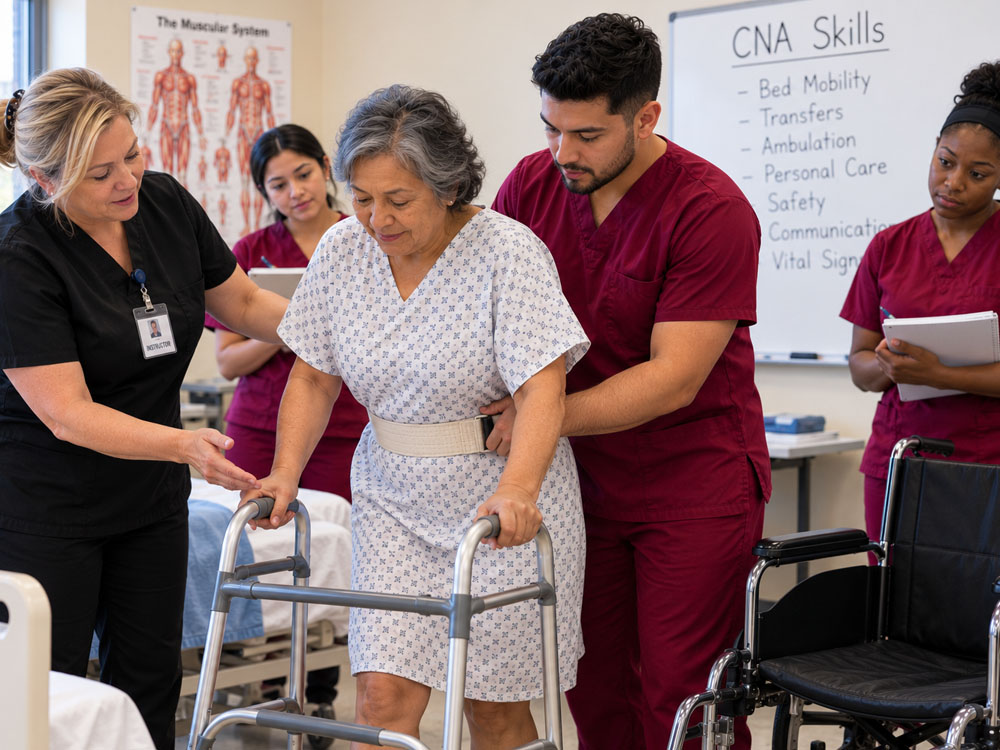
A career in healthcare often begins with learning how to care for someone during the moments they need help most. Helping a patient get comfortable, checking vital signs, assisting with everyday activities, and offering a little reassurance can make a meaningful difference in someone’s day. These are some of the responsibilities Certified Nursing Assistants take on in healthcare settings.
Valley School of Nursing offers CNA classes designed to help students understand the fundamentals of patient care and develop the practical skills needed to pursue California CNA certification. Through classroom instruction and supervised clinical training, students learn how to assist patients safely, communicate with healthcare teams, and approach their responsibilities with professionalism and compassion.
Our nursing assistant training program welcomes students from across the San Fernando Valley, including Van Nuys, Reseda, Northridge, and surrounding Los Angeles County communities. Whether you’re beginning your first healthcare course or considering a different career path, CNA training can provide a foundation for what comes next.
Much of a nursing assistant’s work involves the everyday needs that can have a significant impact on a patient’s comfort and well-being. Something as simple as helping someone change positions, assisting with personal hygiene, or noticing a change in their condition requires care, patience, and attention to detail.
Students in our CNA training program learn about the responsibilities involved in supporting patients while working under the direction of licensed nursing professionals. The goal is to understand not only how to perform essential tasks, but also why those tasks matter to the people receiving care.
As students develop their abilities, they also learn the importance of respecting patient privacy, communicating clearly, following safety procedures, and treating every individual with dignity.
CNA training introduces students to essential patient-care procedures and the professional responsibilities of working in healthcare environments.
Key areas of instruction include:
These subjects help students build the knowledge and practical abilities associated with entry-level nursing assistant work.
Reading about patient care is one thing. Learning how to carry out those responsibilities safely takes instruction, repetition, and practical experience.
CNA classes combine classroom learning with supervised clinical training. Classroom instruction introduces students to healthcare terminology, patient-care procedures, infection control, and the responsibilities of nursing assistants.
During supervised clinical training, students have opportunities to apply appropriate skills in a healthcare setting under qualified supervision. This experience helps connect what they’ve learned in class with the routines, expectations, and responsibilities involved in caring for patients.
For students who are new to healthcare, this transition is an important part of their education. It provides an opportunity to develop practical abilities while learning the importance of teamwork, patient safety, and following established procedures.
Completing a CNA training course is an important step toward becoming a Certified Nursing Assistant, but training and certification are not the same thing.
In California, prospective CNAs must complete an approved nursing assistant training program, pass the required competency examination, and satisfy the California Department of Public Health’s certification requirements.
The process generally involves three stages:
California-approved CNA training programs include at least 160 hours of instruction, consisting of 60 hours of classroom training and 100 hours of supervised clinical training.
After meeting the applicable training and eligibility requirements, students must pass the required examination, which evaluates nursing assistant knowledge and practical skills.
The California Department of Public Health issues CNA certifications to eligible applicants who have satisfied the required examination, application, and background clearance requirements.
Valley School of Nursing helps students navigate the certification process, providing guidance as they work toward completing the necessary steps.
Successfully completing a CNA program does not automatically result in certification. The certification itself is issued by the State of California.
Certified Nursing Assistants are part of the daily care patients receive in many healthcare environments. They often spend considerable time assisting patients with personal needs, observing their condition, and communicating important information to nursing staff.
After obtaining the required certification and meeting an employer’s qualifications, CNAs may find opportunities in settings such as:
For some students, becoming a CNA is the beginning of a longer career in healthcare. Others choose nursing assistant work because they value direct patient interaction and the opportunity to help people with their everyday needs.
Whichever direction you eventually pursue, the knowledge and experience gained through CNA training can help you better understand patient care and the responsibilities of working in a healthcare team.
Choosing a CNA school involves more than finding the nearest classroom. Students often want to understand how the program works, what the training includes, and what steps they’ll need to complete before pursuing certification.
If you’re comparing CNA programs in the San Fernando Valley, it helps to ask about classroom and clinical training, program duration, class schedules, enrollment requirements, tuition, and assistance with the California CNA examination.
Valley School of Nursing serves students from Lake Balboa and nearby communities, including Encino, Sherman Oaks, North Hills, and other parts of Los Angeles County.
Our team can help you learn more about the CNA training program, available classes, and the enrollment process so you can make an informed decision about your education.
The usual pathway involves completing a California-approved nursing assistant training program, passing the CNA competency examination, and satisfying the state’s application and background clearance requirements.
California requires approved CNA training programs to provide at least 160 hours of instruction, including 60 hours of classroom training and 100 hours of supervised clinical training. The number of weeks needed to complete the program depends on the school’s schedule.
CNA training is intended to introduce students to essential nursing assistant skills, so previous healthcare employment is not necessarily required. Applicants must still meet the training program’s enrollment requirements and applicable California eligibility requirements.
Yes. Valley School of Nursing provides guidance to students as they work through the California CNA certification process. The school provides training and assistance, while the California Department of Public Health is responsible for issuing certification.
Students learn essential patient-care skills, including taking vital signs, assisting with daily living activities, infection prevention, patient safety, mobility assistance, communication, and professional responsibilities. CNA training also includes supervised clinical instruction.
CNAs may work in skilled nursing facilities, nursing homes, hospitals, rehabilitation centers, and other healthcare environments, depending on certification, employer requirements, and the responsibilities of the position.
Valley School of Nursing offers CNA training in Lake Balboa, serving students from Van Nuys, Reseda, Northridge, Encino, and surrounding San Fernando Valley communities. Contact the school for current class availability and enrollment information.