There’s something reassuring about being cared for in your own home. Familiar surroundings, personal routines, and the comfort of family can make everyday life easier for someone recovering from an illness or needing additional assistance. Home health aides play an important role in making that possible.
Valley School of Nursing offers Home Health Aide training for students interested in helping people with their daily care needs. The program introduces the skills and responsibilities involved in providing personal care, supporting independence, and recognizing when someone may need additional attention from a healthcare professional.
Located in Lake Balboa, our school welcomes students from throughout the San Fernando Valley and surrounding Los Angeles County communities who want to learn more about working in home-based healthcare.
Caring for Someone in the Place They Call Home
Unlike a hospital or nursing facility, every home is different. People have their own routines, preferences, and ways of doing things. Learning to respect those differences is an important part of becoming a home health aide.
Some individuals need assistance getting dressed or moving safely around their home. Others may need help with meals, personal hygiene, or everyday activities that have become more difficult.
Home health aides learn to provide this support while respecting personal boundaries, following established care plans, and communicating with the healthcare professionals responsible for a person’s care.
What You’ll Learn in Home Health Aide Classes
Home Health Aide training focuses on the practical and interpersonal skills involved in caring for people in their homes.
Students are introduced to subjects such as:
- Personal care: Assisting with bathing, dressing, grooming, and other everyday needs.
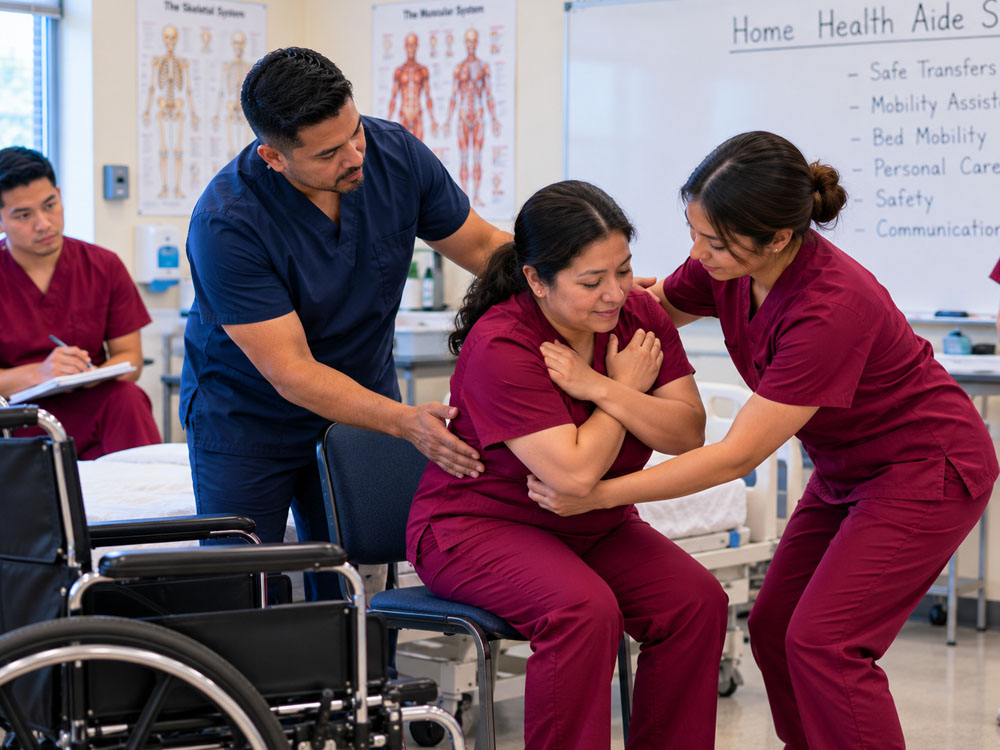
- Safe movement: Helping individuals with mobility and positioning while following appropriate safety procedures.
- Nutrition and hydration: Understanding basic nutritional needs and providing meal-related assistance within assigned responsibilities.
- Infection prevention: Learning hygiene practices and ways to reduce the spread of infection.
- Home safety: Recognizing potential hazards and maintaining a safe immediate care environment.
- Communication: Interacting respectfully with patients, families, supervisors, and other healthcare professionals.
- Patient rights and privacy: Understanding confidentiality, personal choice, and the importance of preserving dignity.
- Observation and reporting: Recognizing changes in a person’s condition and knowing when to report concerns.
These skills are important because providing good home care involves more than completing a list of tasks. It requires patience, awareness, and an understanding of the individual receiving assistance.
Learning to Provide Care Safely and Respectfully
Imagine helping someone who has recently returned home after a hospital stay. They may feel tired, have difficulty moving, or need assistance with activities they previously managed independently.
A home health aide needs to understand how to provide appropriate assistance without rushing the person or taking away their independence.
CHHA training introduces students to these situations through instruction and practical learning. Students become familiar with personal-care procedures, infection prevention, safety practices, and the responsibilities of working under appropriate supervision.
The emphasis is on learning how to carry out assigned duties carefully while recognizing the limits of a home health aide’s role.
Understanding California CHHA Certification
In California, Home Health Aide certification is issued by the California Department of Public Health (CDPH).
The state recognizes two approved training pathways:
- 40-hour supplemental training: Generally intended for individuals who already hold active California CNA certification, subject to applicable eligibility rules.
- 120-hour Home Health Aide training: A separate pathway for eligible individuals who do not already hold CNA certification.
Both pathways have specific training, assessment, and certification requirements.
Students must complete an applicable state-approved training program and satisfy CDPH requirements before receiving certification. Completing coursework alone does not automatically grant the credential.
Prospective students should contact Valley School of Nursing to confirm the CHHA training pathway currently available, enrollment requirements, and class schedules.
A Different Side of Healthcare
Working in someone’s home creates a different kind of patient-care experience. Instead of moving between hospital rooms, home health aides may spend time helping an individual maintain familiar routines and manage everyday needs.
This work calls for reliability, careful observation, and the ability to communicate respectfully with people whose circumstances and needs may change.
For students interested in providing individual care outside a traditional healthcare facility, Home Health Aide training offers an introduction to the responsibilities and expectations of this field.
Valley School of Nursing serves students from Lake Balboa, Van Nuys, Reseda, Encino, and other communities throughout the San Fernando Valley.